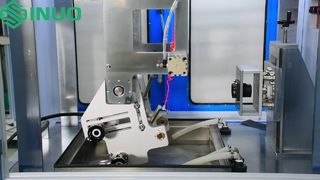
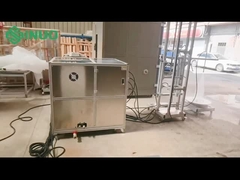
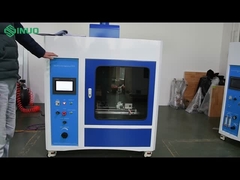
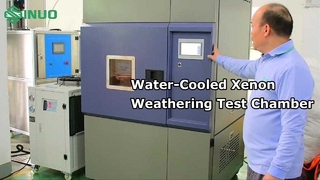
Brief: Step into our short showcase to explore the UN 38.3 Sine Shock Control Vibration Test System's standout capabilities. You'll see a detailed walkthrough of its high-precision performance, from its robust vibration generator to its advanced cooling system, demonstrating how it ensures reliable testing for components from circuit boards to automotive parts.
Related Product Features:
Complies with key international standards including UN 38.3 clause 4.3 test T.3, IEC 62133-1:2017, and IEC 62133-2:2017.
Features a wide frequency range of 5–3500Hz and a continuous displacement of 51mm for versatile testing applications.
Equipped with dual bearing axial guidance to reduce dynamic axial crossing and rotation for superior durability.
Utilizes a double magnetic circuit structure with low flux leakage (<1MT) for a uniform magnetic field.
Incorporates advanced cooling with low-noise fans, a honeycomb air duct, and a new air duct design for enhanced performance.
Offers comprehensive system protection including temperature, over-displacement, over-voltage, over-current, and logic fault protection.
Provides high force capabilities with sine force up to 2000kgf and impact force up to 4000kgf for rigorous testing.
Features a robust construction with phosphating treatment and car paint technology for long-term anti-wear and anti-rust effects.
FAQs:
What standards does this vibration test system comply with?
This system is designed to comply with UN 38.3 clause 4.3 test T.3, IEC 62133-1:2017 clause 7.2.2, and IEC 62133-2:2017 clause 7.3.8.1, ensuring it meets rigorous international testing requirements.
What is the frequency range and displacement capability of the system?
The system operates within a frequency range of 5 to 3500Hz and offers a continuous displacement of 51mm, providing broad testing versatility for various components and conditions.
How does the system ensure durability and effective cooling during operation?
It features dual bearing axial guidance for reduced wear and a sophisticated cooling system with low-noise fans, a honeycomb air duct, and an optimized air intake structure to maintain performance and longevity.
What are the key protection features of the vibration test system?
The system includes multiple protection mechanisms such as temperature, over-displacement, over-voltage, over-current, under-voltage, external, and logic fault protection to safeguard both the equipment and the test specimens.