Is Your Product Ready for Acceleration and Mechanical Shock Testing?

EV Battery Testing Equipment
January 07, 2026
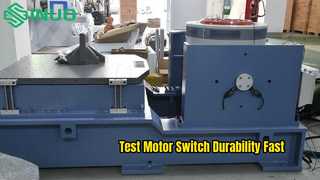
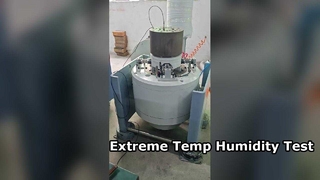
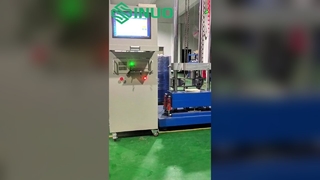
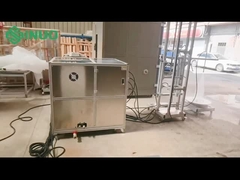
Brief: In this video, we explore how the EV Battery Acceleration Test Equipment ensures your products can withstand real-world mechanical shocks. Follow the narrative to see how small design choices affect everyday performance, with a detailed walkthrough of the hydraulic lift system conducting half-sine peak acceleration tests according to international standards like MIL-STD and IEC.
Related Product Features:
  • Performs shock tests using half-sine, post-peak sawtooth, or square waves by selecting different waveform generators.
  • Complies with MIL-STD-202F, IEC-68-2-27, MIL-STD-810F, and MIL-STD-883E standards for reliable testing.
  • Features a high-strength imported aluminum alloy working platform measuring 800x800 mm with a maximum load of 300kg.
  • Delivers half-sine peak acceleration from 15 to 350 G with a pulse duration range of 2.5 to 30ms.
  • Utilizes a hydraulic lift mechanism for precise and controlled shock application during testing.
  • Includes a 2-channel measuring system with a 192KHz sampling frequency for accurate data acquisition.
  • Equipped with a YMC acceleration sensor offering a sensitivity of 3.93pC/g and a range of ±2500G.
  • Operates on a three-phase, five-wire power supply at 380V with comprehensive environmental requirements.
FAQs:
  • What industries is this EV Battery Acceleration Test Equipment designed for?
    It is designed for shock testing applications in electronics, aerospace, shipbuilding, military, automotive, and transportation industries.
  • What types of shock waveforms can this system generate?
    By selecting different waveform generators, it can perform shock tests using half-sine, post-peak sawtooth, or square waves.
  • What are the key technical parameters for the half-sine shock tests?
    The system offers a half-sine peak acceleration range of 15 to 350 G with a pulse duration of 2.5 to 30ms.
  • What standards does this acceleration test equipment comply with?
    It conforms to MIL-STD-202F, IEC-68-2-27, MIL-STD-810F, and MIL-STD-883E standards for rigorous testing compliance.