logo

products details

Created with Pixso. Home Created with Pixso. Products Created with Pixso.
Electric Vehicle Testing Equipment
Created with Pixso.

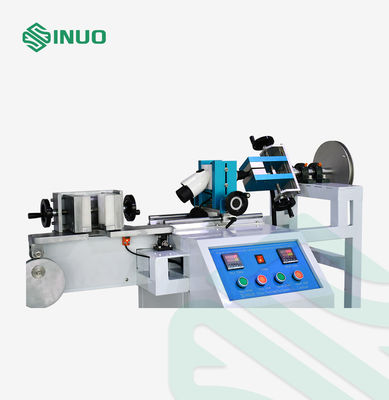
IEC 62196-1 EV Plug Pull Force and Torque Tester for Charging Connector Testing

IEC 62196-1 EV Plug Pull Force and Torque Tester for Charging Connector Testing

Brand Name: Sinuo
Model Number: SNQC1007
MOQ: 1
Price: Customized
Payment Terms: T/T
Supply Ability: 10 sets per month
Detail Information
Place of Origin:
China
Certification:
Calibration Certificate (Cost Additional)
Pull Weights:
160N, 200N, 240N, 250N,500N, 600N
Torque Weights:
0.6N.m, 0.7N.m, 1.2N.m, 1.5N.m, 2.3N.m, 11N.m
Torque Arm:
R100mm(Ф200mm)
Pull Frequency:
1cycle/s
Pull Cycles:
1-9999 Cycles, Can Be Preset, Default 100 Cycles
Torque Time:
0-99H59M59S, Can Be Preset, Default 1min
Packaging Details:
Plywood Case
Supply Ability:
10 sets per month
Highlight:

IEC 62196-1 EV plug tester

,

EV charging connector torque tester

,

pull force tester for EV plugs

Product Description
IEC 62196-1 EV Plug Pull Force and Torque Tester for Charging Connector Testing
Product information:

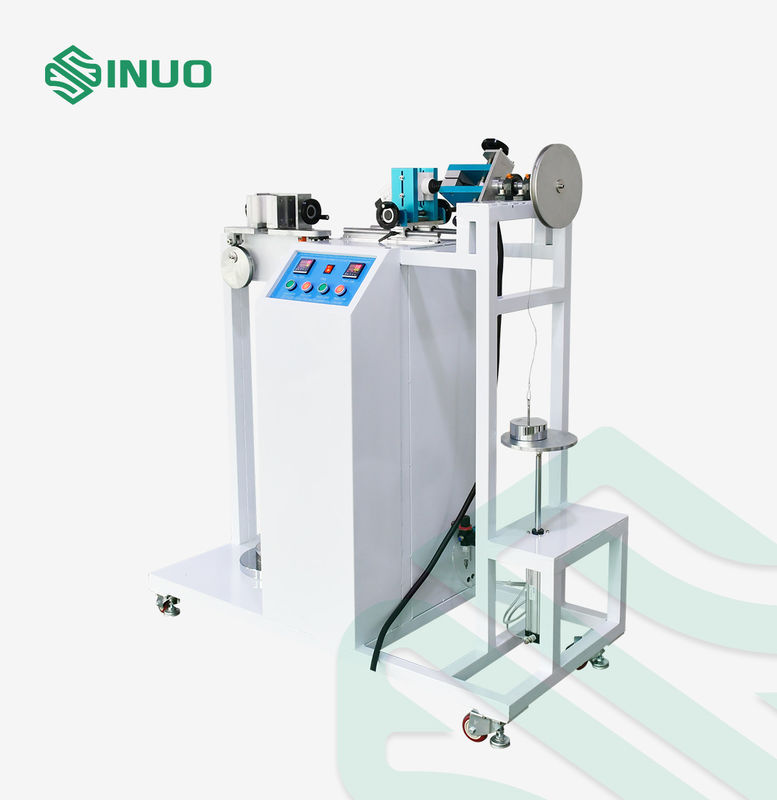
The EV Plug Pull Force and Torque Tester is designed to test the mechanical strength of electric vehicle charging plugs, socket-outlets, and connectors. It verifies whether EV charging interfaces can withstand specified pulling force and torque requirements during connection and usage.

This tester is widely used by EV charging equipment manufacturers, automotive laboratories, and connector testing organizations for reliability and safety evaluation.

The equipment is designed according to IEC 61851-1:2017 Clause 11.6, IEC 62196-1:2020 Clause 25.3 Figure 17 & Table 11, and IEC 60309-1:2012 Clause 23.3.

Test Principle

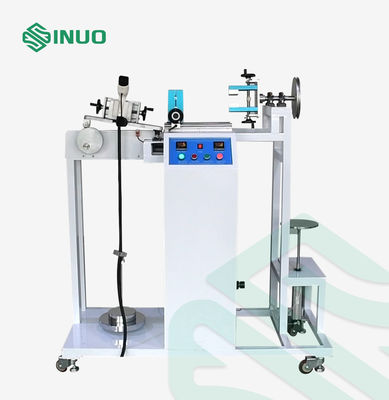
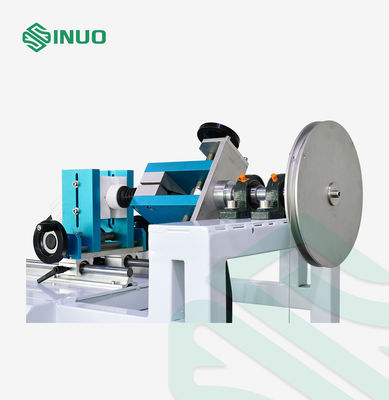
The pull force test is achieved by a single-phase speed-regulating motor driving an eccentric mechanism. The adjustable motor speed ensures accurate force application time and stable testing cycles.

The torque test is performed by a air cylinder releasing the torque weight, applying the required rotational load to evaluate the mechanical strength of the connector.

IEC 62196-1 EV Plug Pull Force and Torque Tester for Charging Connector Testing
Technical parameters:
Operation Method Button operation
Drive Mode Motor and cylinder
Pull Force Weights One set of pull force weights
Can achieve 160N, 200N, 240N, 250N,500N, 600N
Torque Weights One set of torque weights
Can achieve 0.6N.m, 0.7N.m, 1.2N.m, 1.5N.m, 2.3N.m, 11N.m
Torque Arm R100mm(Ф200mm)
Pull Frequency 1cycle/s
Pull Cycles 1-9999 cycles, can be preset, default 100 cycles
Torque Applied Time 0-99H59M59S, can be preset, default 1min
Fixture One set of universal fixtures
Equipment Dimensions & Weight W1300*D800*H1300mm, the whole machine is about 150Kg
Power Supply Single phase AC220V±10%, 50Hz, 10A
IEC 62196-1 EV Plug Pull Force and Torque Tester for Charging Connector Testing
Testing Procedure
  1. Install the EV plug or connector onto the dedicated fixture.
  2. Set the required pulling force and torque values according to the applicable standard.
  3. Start the automatic test process.
  4. The equipment applies pulling force through the eccentric drive mechanism.
  5. The torque system releases the calibrated weight to apply rotational force.
  6. Evaluate whether the connector maintains mechanical integrity after testing.

Product Advantages
  • Designed specifically for EV charging connector mechanical testing
  • Supports IEC 61851-1 and IEC 62196-1 compliance verification
  • Suitable for automotive laboratories and EV component manufacturers
  • Stable force application with accurate test control
  • Helps improve charging connector safety and reliability